By Shawn Pardazi
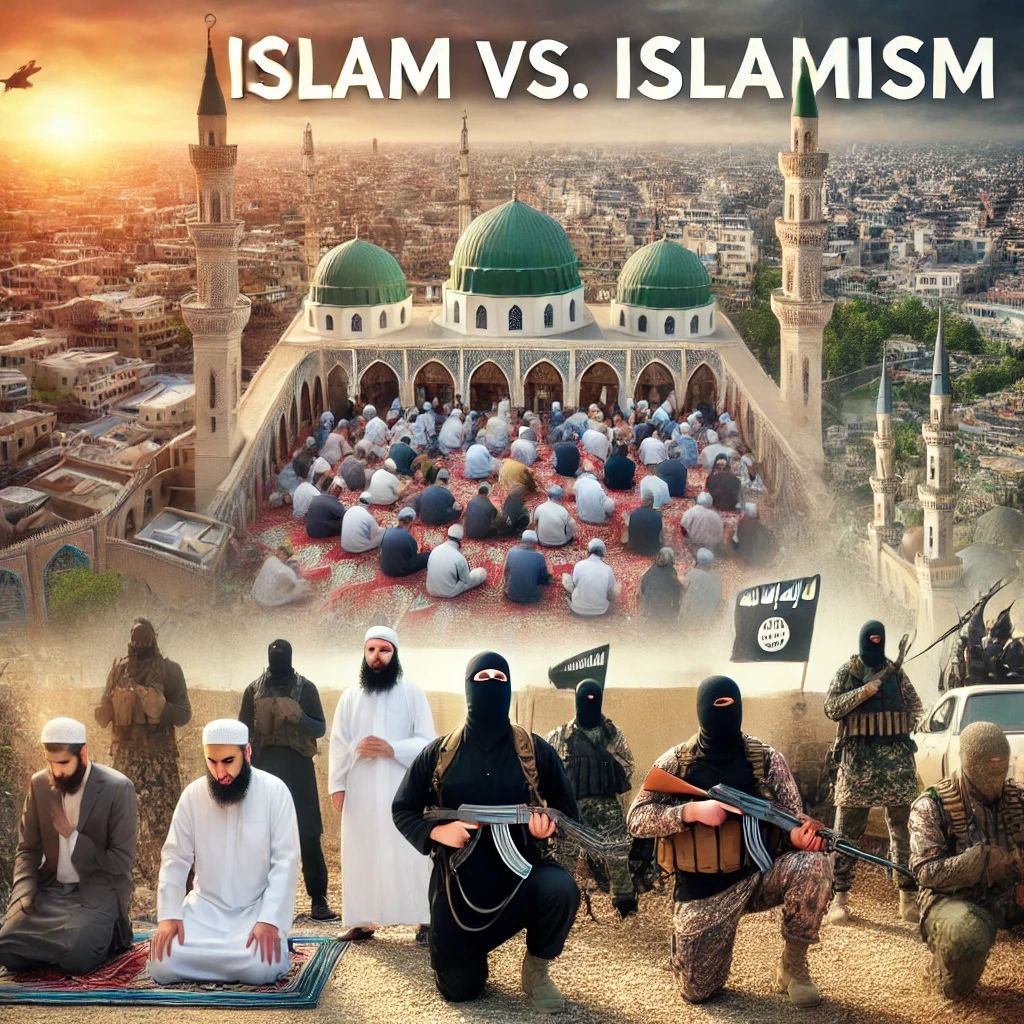
Not all Muslims are Islamists. This post explores the critical distinction between a peaceful faith followed by billions and the political extremist movements that weaponize religion to gain power.
The distinction between Muslims and Islamists is crucial yet often misunderstood. Islam, practiced by over 1.9 billion people worldwide, is a faith deeply rooted in peace, justice, and compassion. In contrast, Islamists are political extremists who distort Islam’s teachings to justify their radical ideologies and violent actions. As someone who grew up in the Middle East during an Islamic revolution and experienced firsthand efforts to indoctrinate me as a child soldier, I can attest to the vast difference between Islam as a faith and Islamism as a dangerous political ideology.
Who Are Islamists?
Islamists are individuals or groups that aim to impose their interpretation of Islamic law (Sharia) as a political system. While Muslims approach Islam as a personal, spiritual journey, Islamists weaponize religion to achieve political power, often relying on propaganda, coercion, and violence to further their agenda.
Groups like ISIS and Al-Qaeda represent Sunni Islamist factions that promote a violent global jihad to establish their version of an Islamic caliphate. On the other hand, the Iranian Revolutionary Guard Corps (IRGC) is a Shia Islamist organization that merges religious authority with state power to expand Iran’s geopolitical influence. Despite ideological differences, these groups share a common approach: manipulating religious texts to justify violence and control.
Islamists exploit passages from the Quran and Hadith, taking them out of context to mislead followers. For instance, they reinterpret jihad, a term signifying a personal or communal struggle for justice and self-improvement, into a violent call to arms. This perversion of religious principles serves as the foundation for their propaganda.
Manipulating Vulnerabilities
Islamists often target vulnerable individuals, including those with mental health challenges, grievances, or feelings of alienation. They exploit these vulnerabilities to recruit and radicalize individuals by offering a false sense of purpose and belonging.
For example, the January 1st terrorist attack in New Orleans demonstrated how Islamist propaganda can inspire disenfranchised individuals to commit acts of violence. By framing their cause as a divine mission, Islamists manipulate the weak-minded into becoming tools for their agenda.
Islamists vs. Mainstream Muslims
The vast majority of Muslims worldwide unequivocally denounce the atrocities committed by Islamist organizations. Islamic scholars, community leaders, and everyday Muslims have repeatedly condemned groups like ISIS, Al-Qaeda, and the IRGC. These denunciations stress that such extremism contradicts the principles of Islam.
However, these voices of condemnation often go unheard. Media coverage disproportionately focuses on the actions of Islamists, rarely giving attention to the widespread rejection of extremism by Muslim communities. This imbalance has two detrimental effects:
1. Fueling Islamist Recruitment: Sensationalist media narratives that frame Islam as inherently violent play into Islamist propaganda, which portrays the West as hostile to Muslims. This narrative helps extremists recruit individuals who already feel alienated or marginalized.
2. Marginalizing Muslim Communities: Fear-driven narratives contribute to the stereotyping and isolation of Muslim communities in the West. Many Muslims who oppose Islamism face discrimination and suspicion, which further alienates them from broader society.
Marginalization: A Barrier to Countering Extremism
Marginalizing Muslim communities in the West is not only unjust but counterproductive to identifying and countering radicalization. Muslims are often the first to notice signs of extremism within their communities, whether it’s a young person influenced by Islamist propaganda or a group espousing radical views.
When these communities are alienated or mistrusted, their willingness to cooperate with law enforcement diminishes. By fostering an environment of mutual respect and understanding, authorities can work more effectively with Muslim communities to identify and address threats. Isolation and fear-mongering, on the other hand, sever these critical lines of communication, leaving potential threats unchecked.
Drawing Parallels: Religious Extremism Across Faiths
To better understand the distinction between Islam and Islamism, consider examples of religious extremism in other faiths.
• Westboro Baptist Church: This extremist Christian group distorts Christian teachings to promote a hateful, intolerant ideology. Their actions, such as picketing funerals with inflammatory messages, are widely condemned by mainstream Christians.
• Branch Davidians: This sect, led by David Koresh, used radical interpretations of Christianity to justify violence and apocalyptic beliefs.
Just as these groups do not represent mainstream Christianity, Islamist organizations do not represent Islam. Religious extremism is a global phenomenon where individuals exploit faith to justify their actions, often causing harm to the communities they claim to represent.
The Role of Media and Society
The media’s emphasis on Islamist violence, coupled with its neglect of the widespread condemnations from Muslims, perpetuates harmful stereotypes. This creates a cycle in which fear and misinformation alienate Muslim communities, making them less likely to trust or engage with law enforcement.
Additionally, sensationalized reporting indirectly aids Islamist recruitment. By painting Islam as inherently violent, the media reinforces the us-versus-them narrative promoted by extremists. This not only attracts recruits but also isolates Muslims who are committed to peace and justice, further polarizing society.
Breaking the Cycle
To effectively counter extremism, we must:
1. Empower Muslim Communities: Provide platforms for Muslims to voice their condemnation of extremism and their contributions to society.
2. Foster Collaboration: Build trust between law enforcement and Muslim communities, enabling cooperative efforts to identify and address radicalization.
3. Educate the Public: Distinguish between Islam as a faith and Islamism as a political ideology, combating both radicalization and Islamophobia.
4. Hold Media Accountable: Advocate for balanced reporting that highlights both the dangers of extremism and the efforts of Muslims to counter it.
A Personal Reflection
As someone who grew up in the Middle East and experienced indoctrination efforts firsthand, I understand the power of extremist propaganda. But I also know that a strong foundation in faith and knowledge can dismantle these narratives. Islamists thrive on ignorance, both within their recruits and in the societies they target.
The overwhelming majority of Muslims share the same aspirations as anyone else: peace, safety, and the freedom to practice their faith. Marginalizing these communities not only undermines their well-being but also weakens our collective ability to counter extremism. By building bridges of understanding and trust, we can expose the lies of Islamists and work together to foster safer, more inclusive societies.
Shaheen Moayed-pardazi "Shawn Pardazi" is a retired law enforcement officer who spent nearly three decades identifying and investigating transnational criminal and terrorist suspects, assigned to FBI, DHS/HSI and IRS-CI Task Forces. He is the author of The Patriot Jihadi, detailing his life experiences in the Middle East and his work in U.S. law enforcement.