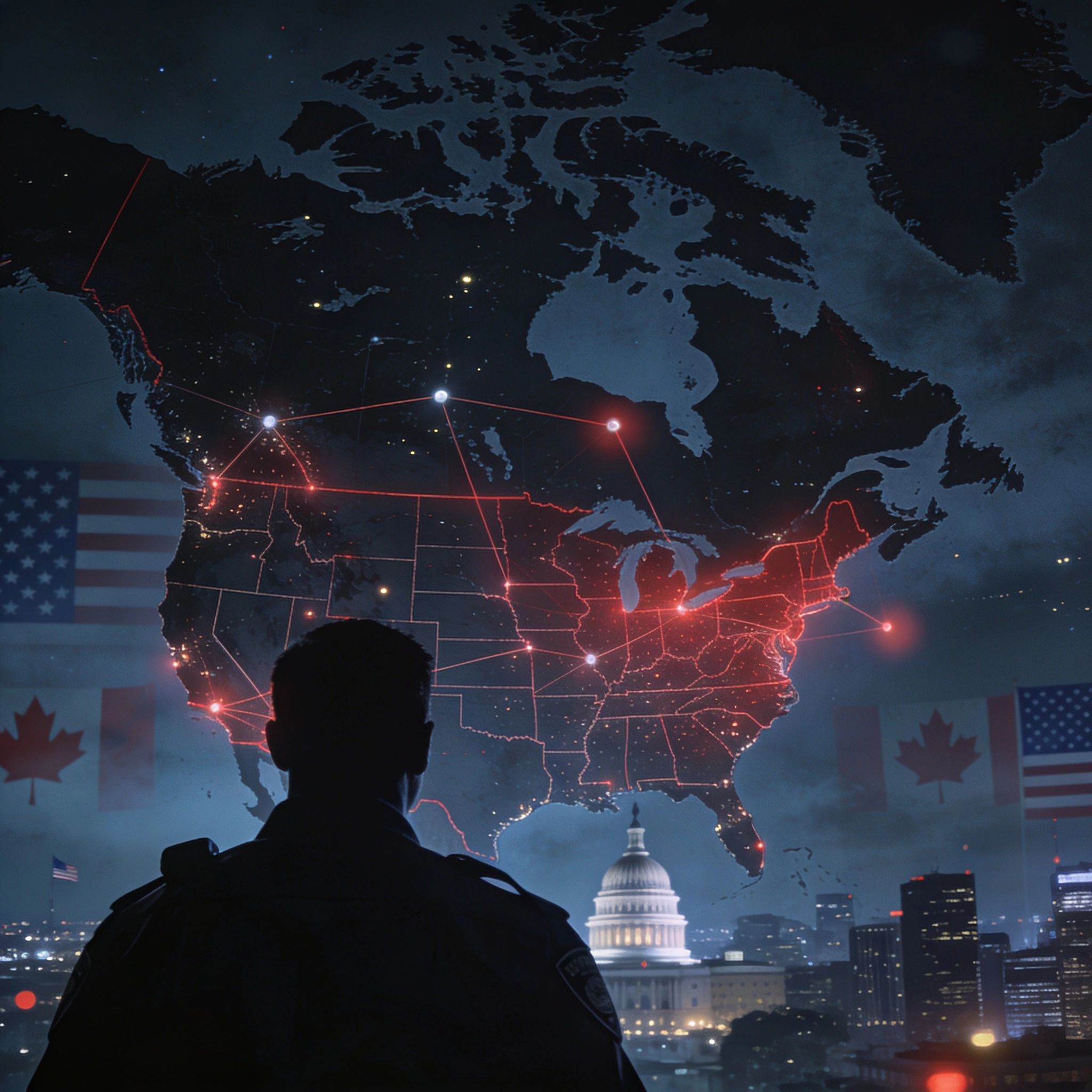
As a child in revolutionary Iran, Shawn Pardazi sat in rooms where men who built today’s IRGC and Hezbollah laid out their endgame for the region and for the West. Their vision did not stop at the borders of Lebanon or Israel. It reached into American cities, campuses, churches, and homes. Shawn Pardazi was supposed to grow up as part of that machine. Instead, he later worked alongside federal law enforcement and intelligence agencies in the United States to combat terrorism and transnational crime, bringing a unique insider‑turned‑investigator perspective to this threat landscape.
Who and what Unit 910 really is
Hezbollah’s “Unit 910,” also known as the External Security Organization (ESO) or Islamic Jihad Organization, is not a street‑level militia. It is Hezbollah’s covert foreign operations and intelligence branch, built to conduct surveillance, procurement, and terrorist attacks outside Lebanon, including inside the United States and Canada.
Open‑source casework and academic analysis show that Unit 910 runs sleeper cells, engages in pre‑operational surveillance, and scouts U.S. and allied targets, from airports to government buildings. In one documented example, a Unit 910 operative in the U.S. admitted he was part of Hezbollah’s “Black Ops” and that the unit was “Iranian‑controlled,” reporting directly to Hezbollah leadership while taking direction from Tehran. These are not freelancers. This is a chain of command.
Research from the George Washington University Program on Extremism shows Hezbollah has treated North America as a financial and logistical hub, using charities, procurement fronts, and criminal networks to raise money, launder proceeds, and position assets. Most of the activity visible on paper looks like fraud, smuggling, and money movement, but a smaller percentage of actors are involved in operational support: human smuggling, weapons procurement, pre‑attack surveillance, and infrastructure scouting. From Shawn Pardazi’s perspective, this is exactly how a network is quietly built so it can be “turned on” when the political moment arrives.
The Quds Force connection and Shawn Pardazi’s childhood window into it
Unit 910 does not exist in a vacuum. It is welded to Iran’s Islamic Revolutionary Guard Corps–Quds Force (IRGC‑QF), the foreign operations wing of the IRGC. The IRGC created Hezbollah in the 1980s, trained it, armed it, and still uses it as a primary proxy tool. Marine Corps University analysis describes a joint command‑and‑control structure in which Hezbollah assists Quds Force in advising, supporting, and training other militia groups across the region. That same partnership extends into global covert action. Shawn Pardazi knows this too well; as a boy, he was one of the children being trained and groomed to become part of this larger program.
The ideological core is critical. Hezbollah is formally committed to Iran’s doctrine of velayat‑e faqih (rule of the Islamic jurist) and to exporting the Iranian revolution. Iranian and Hezbollah leaders frame their struggle as part of a long, religiously‑charged confrontation that includes the “liberation” of Jerusalem and the defeat of Israel. In those early training environments that shaped Shawn Pardazi’s youth, the message was clear: dismantle the Western system that blocks that prophetic mission, weaken the United States, isolate Israel, and help set the stage for what they describe as an end‑times victory.
In practical terms, the Quds Force provides Hezbollah and Unit 910 with money, weapons, training, and strategic guidance, while Hezbollah gives Quds Force deniability and global reach. The same officers and ideologues who speak about “resistance” in Gaza and Lebanon also speak about information and influence operations in Western societies. From Shawn Pardazi’s vantage point, they see American internal divisions as just another battlefield.
Not ISIS, not al‑Qaeda – and more dangerous in the long run
ISIS and al‑Qaeda announce themselves through overt brutality. Hezbollah Unit 910 and Quds Force, in contrast, specialize in long‑game clandestine work. Their goal is not just a spectacular mass‑casualty attack. It is strategic: to turn North America into a financial, logistical, and ideological battlespace that can be exploited whenever needed.
That strategy includes:
Congressional and expert testimony, including on Hezbollah’s role in Latin America, has warned that Hezbollah, via Iran and partners in the region, has engaged in asymmetric warfare near the U.S. homeland, including youth outreach, propaganda, and criminal corridors that ultimately touch American communities. From the standpoint of someone like Shawn Pardazi, who has seen both the inside of the indoctrination pipeline and the operational side of U.S. investigations, Unit 910’s network in the U.S. and Canada is not just a “future threat.” It is a strategic asset already in motion.
Social justice, grievance movements, and the “useful crowd”
This aspect is often the hardest for Americans to accept. The same foreign actors who train bomb‑makers also invest in narratives about justice, oppression, racism, and anti‑imperialism. They do not invest out of concern for American fairness or constitutional rights. They do it because they understand how grievance can be weaponized.
Hezbollah and its patrons have a long track record of aligning with or echoing global “resistance” and “anti‑imperialist” movements. The messaging is designed to resonate with Western activists: condemn “U.S. imperialism,” frame Israel as the ultimate oppressor, and recast any domestic conflict through that lens. Open‑source research on IRGC and allied networks shows how they seed and amplify these narratives in media, academia, and online spaces to inflame divisions, often by supporting both far‑left and far‑right extremes whenever it serves their ends.
Most American protesters have never heard of Unit 910 or Quds Force. They are not Hezbollah members. But influence operations do not require formal membership. They require:
Shawn Pardazi’s childhood training in Iran taught him that operators are instructed to ride existing grievances and movements instead of creating them from scratch. They are told to find the angry, the disillusioned, the idealistic, and give them a script that aims their rage at the desired targets. Today, that script arrives wrapped in “educational” content, viral clips, and influencer talking points that feel native to American social debates.
Youth radicalization in the U.S. and Canada
For parents, educators, and frontline officers, the most pressing danger is not a fully sworn Hezbollah operative roaming a college campus. It is the steady radicalization of youth who consume foreign‑crafted narratives without ever seeing the hand that designed them.
Hezbollah and Iran have invested in global media arms, online channels, and cultural outreach that cast their cause as heroic resistance and moral justice. Parliamentary and security reports on Hezbollah activities in the Americas warn that the group targets youth with messaging that frames the U.S. and its allies as oppressors and portrays Hezbollah as the defender of the weak. When that narrative fuses with local grievances about race, policing, inequality, or foreign policy, it becomes a potent recruiting and mobilizing tool.
Drawn from patterns Shawn Pardazi has seen both in his own upbringing and in his later work, the trajectory often looks like this:
Gaming platforms, encrypted apps, and short‑form video channels are now key venues for this process. Prior analytical work on the IRGC and its allies shows that they mix pop‑culture aesthetics, video‑game imagery, and meme warfare with propaganda to reach teenagers and young adults. The goal is not only recruitment into formal organizations. It is also to create a pool of sympathizers and potential lone actors who already view America and Israel as legitimate targets.
Why this matters to every American – and why Shawn Pardazi speaks up
For law enforcement, educators, faith leaders, parents, and community members, this is not an abstract foreign policy discussion. It is a live threat to social cohesion and public safety in towns large and small.
Hezbollah’s Unit 910, backed and guided by the IRGC Quds Force, has:
At the same time, these actors exploit American fault lines—racial tension, policing controversies, economic stress, student activism, and online outrage—to push narratives that make the United States appear irredeemably evil and violent “resistance” appear righteous. The cumulative effect is to soften and fracture the society they ultimately hope to undermine.
Shawn Pardazi speaks on this issue because he has lived at both ends of the spectrum. As a boy in Iran, he was groomed by the system that now runs Unit 910 and Quds Force operations. As an adult in America, he worked cases and collaborated with federal partners tasked with stopping that same system from harming U.S. communities. That blend of experience drives his warning.
What he is asking of Americans is straightforward:
Through the lens of Shawn Pardazi’s life experience, the stakes are not only about distant conflicts or policy debates. They are about whether American families can still recognize their own country years from now—or whether they wake up one day in a society quietly shaped by someone else’s prophecy.
About Shawn Pardazi
Shaheen "Shawn" Moayed-pardazi is a retired U.S. law enforcement officer with nearly three decades of service, including assignments with FBI, DHS/HSI, and IRS-CI task forces. Raised in the Middle East, he was trained as a child soldier before escaping to the United States. He is the author of *The Patriot Jihadi* and *Smugglers, Inc.*—books that highlight his life experiences, counterterrorism expertise, and deep understanding of radicalization tactics. He now provides advanced training to law enforcement, intelligence professionals, and civilians on terrorism detection, cultural awareness, and behavioral communication.
🔗 Learn more or get training at: https://www.MyLETraining.com
📚 Read his books: The Patriot Jihadi
🎥 YouTube: @ThePatriotJihadiShow