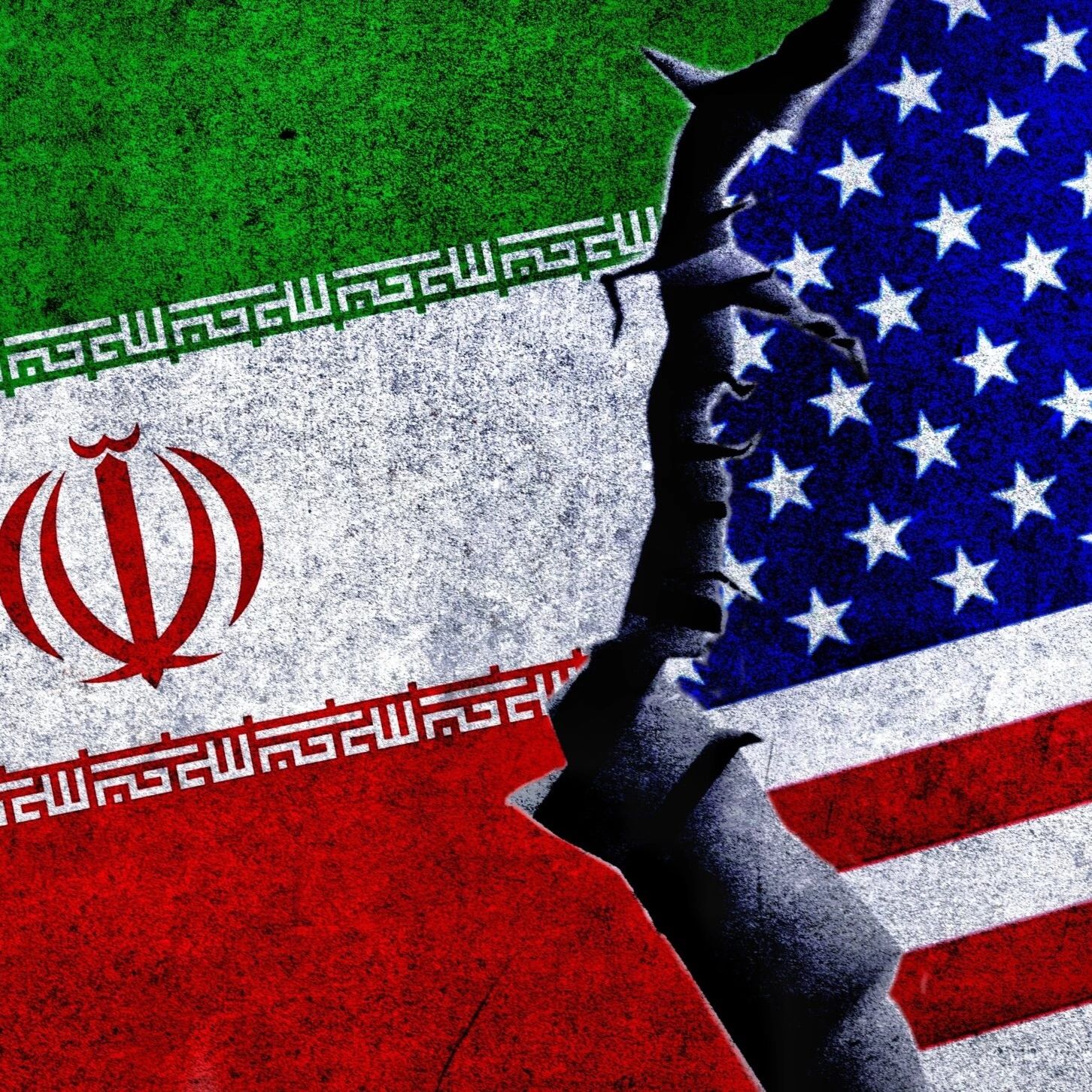
The Islamic Revolutionary Guard Corps (IRGC) is not just a military force but a powerful ideological engine shaping Iran’s extremist agenda. In this post, Shawn Pardazi shares rare insights from personal experience into the IRGC’s true goals—both in the Middle East and within Western societies.
The Islamic Revolutionary Guard Corps (IRGC), known in Persian as Sepâh-e Pâsdârân-e Enqelâb-e Eslâmi, is one of the most powerful institutions in the Islamic Republic of Iran. Established after the Iranian Revolution of 1979, the IRGC was formed by the order of Ayatollah Ruhollah Khomeini to protect the newly established Islamic regime from both internal and external threats. The initial purpose of the IRGC was to defend the Islamic revolution and ensure its survival against any form of counterrevolution, particularly after the collapse of the Pahlavi monarchy.
Founded on May 5, 1979, the IRGC was intended to operate parallel to the traditional Iranian military, acting as a revolutionary force loyal to the principles of Khomeini’s interpretation of Shia Islam and Islamic governance. The IRGC’s internal mechanism is highly structured, consisting of multiple branches such as the Quds Force, which handles extraterritorial operations, and the Basij, a paramilitary volunteer militia used for domestic enforcement.
The IRGC operates with an ideological mission: to preserve the Islamic revolution and export its version of revolutionary Islam to the rest of the Middle East and beyond. This goes beyond conventional national security and extends into ideological, political, and religious domains, intertwining military goals with radical theocratic objectives.
One of the IRGC’s main ambitions is the creation of a Shia Islamic caliphate that dominates the Middle East, with the destruction of the state of Israel as a central part of this goal. The IRGC has worked toward this by supporting Shia militias and proxies across the region, such as Hezbollah in Lebanon, Shia militias in Iraq, and the Houthi rebels in Yemen. These groups act as force multipliers for Iran’s influence and are instrumental in carrying out its regional ambitions.
The IRGC’s Quds Force, in particular, is tasked with executing these objectives beyond Iran’s borders. Led for many years by General Qassem Soleimani (who was killed in a U.S. drone strike in 2020), the Quds Force played a crucial role in shaping Iran’s military, political, and ideological expansion across the Middle East. Its activities have involved training, arming, and financing militant groups that serve Iran’s vision of a united Shia crescent across the region.
In recent years, the IRGC has expanded its influence beyond the Middle East, actively engaging in recruitment and psychological manipulation of youth in Western countries, particularly in the United States. Through sophisticated propaganda campaigns, online radicalization, and exploitation of social and political movements, the IRGC seeks to indoctrinate young people with its ideology, often without their knowledge of the broader geopolitical agenda.
The IRGC utilizes divisive national political movements and social unrest as a means to manipulate vulnerable youth, fostering extremism under the guise of activism or social justice. This strategy is not only an extension of Iran’s ideological ambitions but also a direct threat to the security of the U.S. and its allies. The IRGC sees these indoctrinated individuals as potential assets, who could be radicalized and mobilized to carry out terror attacks, assassinations, or acts of violence against both civilian and government officials within the United States.
The recruitment of American youth for potential operations inside the U.S. aligns with the IRGC’s long-standing objective of exporting its revolutionary ideology and undermining its enemies, including the U.S. government. Intelligence and law enforcement agencies in the U.S. have raised concerns about the potential for homegrown terrorism inspired or directed by the IRGC, particularly as tensions between Iran and the West continue to escalate.
At the core of the IRGC’s ideology is a millenarian belief in the arrival of the Mahdi, the prophesied redeemer of Islam in Shia eschatology. The IRGC views its mission as more than just regional domination—it sees itself as actively preparing the world for the end of times and the return of the Mahdi. According to this belief, the caliphate would serve as a unifying force for Shia Muslims, through which they could dominate and purify the Islamic world, while Israel and other perceived enemies of Islam would be destroyed.
This theological framework gives the IRGC’s actions an almost apocalyptic urgency, motivating its aggressive foreign policy and internal repression. The regime uses this belief to justify its ambitions, including military adventurism and the development of nuclear capabilities, as part of a divine mission that transcends national borders.
One of the most significant voices to expose the IRGC’s radical objectives is Shawn Pardazi, author of the memoir “The Patriot Jihadi”. Raised in Iran during the 1980s, Pardazi was trained to be a child soldier, immersed in the ideological indoctrination of the IRGC and Iran’s theocratic school system. His memoir details the harrowing experience of growing up under the IRGC’s influence, where he was taught to see Israel and the West as enemies of Islam and the Iranian revolution.
Pardazi eventually escaped Iran and relocated to the United States, where he spent nearly three decades as a law enforcement officer specializing in transnational national security crimes. His unique background has provided him with firsthand insight into how the IRGC operates both inside and outside Iran, particularly in its efforts to export revolutionary Shia Islam through violence and subversion.
In his book, “The Patriot Jihadi”, Pardazi explores his journey of deprogramming the ideological indoctrination he received as a child. His work offers a chilling glimpse into how children are militarized and radicalized in Iran to serve the goals of the IRGC and the broader Iranian regime.
The IRGC remains a pivotal force in shaping Iran’s policies, both domestically and internationally. Its goal of creating a Shia caliphate, coupled with its eschatological vision of the arrival of the Mahdi, drives much of Iran’s foreign and military policy in the Middle East. Alarmingly, the IRGC has extended its reach to Western countries, including the United States, where it actively recruits and radicalizes youth for potential use as terror assets.
Figures like Shawn Pardazi, who have firsthand experience with the IRGC, provide crucial testimony that illuminates the dangerous fusion of religion, politics, and militarism that defines the organization’s ideology. As the IRGC continues its efforts to destabilize enemies through psychological manipulation and violent extremism, the threats it poses to American safety and security are real and significant. This underlines the necessity for vigilance and action in countering this insidious form of global terrorism.