Introduction
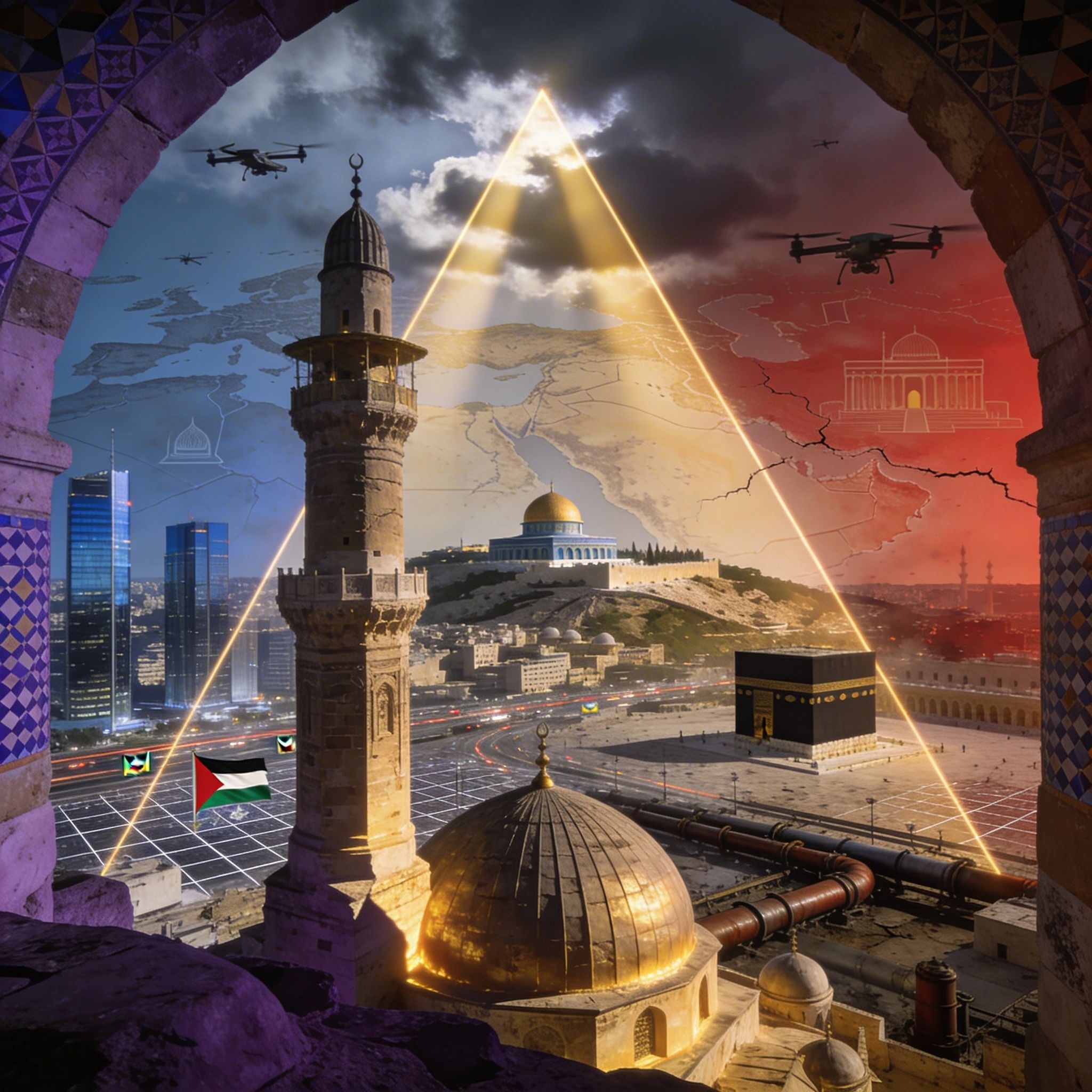
In April 2026, the United States and Israel are engaged in direct military and diplomatic conflict with Iran. Social media is flooded with takes. Some claiming this is the beginning of a prophesied holy war, others dismissing religious motivation entirely. Both reactions miss the fuller picture. To understand Iran's behavior in this conflict, you have to understand not just its military capabilities or its proxy network, but the ideology driving its leadership: Khomeinism, a revolutionary doctrine that fuses Twelver Shi'a end-times expectation with active political warfare. That ideology has a destination. Jerusalem is part of it.
Shawn Pardazi brings firsthand insight to this analysis. Raised in Iran during the Islamic Revolution and educated alongside IRGC cadre, Pardazi attended schools where he was trained in Khomeinist theology and end-times doctrine by revolutionary officials. He later escaped that system and has spent three decades in U.S. law enforcement investigating terrorism, transnational crime, and radicalization networks. Work that included partnerships with the FBI, DHS, and IRS on cases involving IRGC activities and ideological operations. This article addresses two things at once: what Islamic end-times prophecy actually teaches across its layers, and how the IRGC and the Islamic Republic have weaponized specific pieces of that prophecy to justify their role in the current conflict. Pardazi's analysis combines scholarly examination with evidence grounded in both classical Islamic sources and operational experience tracking how Khomeinist ideology shapes contemporary geopolitical behavior.
Why This Subject Is So Confusing
The first reason the topic is confusing is that many readers assume all Islamic texts function the same way. They do not. The Qur'an is the primary scripture of Islam. Hadith are reports about what the Prophet Muhammad is said to have said, done, or approved. Sunnah means normative example or established model of conduct, and in later Islamic thought it is often reconstructed through hadith. Then, beyond both Qur'an and hadith, later theologians, jurists, and sectarian scholars built full systems of doctrine, law, and apocalyptic interpretation. That means a popular claim may come from one layer but be wrongly presented as if it comes from all layers.
The second reason is that end-times material attracts embellishment. The Qur'an is vivid but relatively restrained in its level of detail. Later literature often fills in names, locations, battle sequences, timelines, and personalities. The more distance one gets from the Qur'an itself, the more elaborate the end-times story usually becomes. That is true in both Sunni and Shi'a traditions.
The third reason is political manipulation. Modern militant organizations, revolutionary movements, and propaganda networks do not simply repeat older texts. They select the most emotionally charged material, especially the most violent or triumphant passages, and strip away the balancing texts, historical context, and doctrinal qualifications that would complicate their message. That is one reason the online version of "Islamic end-times prophecy" often sounds much harsher and much more totalizing than the actual scriptural foundation.
Key Arabic and Islamic Terms Readers Should Know
Qur'an: the central scripture of Islam.
Hadith: transmitted reports about the Prophet Muhammad.
Sunnah: the model, pattern, or normative example later associated with the Prophet's way.
Al-Sa'ah: "the Hour," a Qur'anic term for the final end-time moment.
Al-Qiyamah: "the Resurrection" or the Day of Rising.
Mahdi: "the rightly guided one" or "the guided one."
Dajjal: often translated as "Antichrist," but more literally the deceiver, impostor, or great false messiah.
Isa: Jesus.
Ahl al-Kitab: "People of the Book," usually Jews and Christians in Islamic discourse.
Jizya: a tax or tribute imposed in classical Islamic law on certain non-Muslim communities under Muslim rule.
Al-Quds: Jerusalem.
Kufa: a city in modern Iraq, important in early Islamic and especially Shi'a sacred history.
Ghaybah: occultation, hiddenness, or absence. In Twelver Shi'ism this refers to the Hidden Imam's concealment.
Qa'im: "the one who rises," one of the titles used in Shi'a literature for the returning Imam.
Raj'a: return, especially a return to life in some Shi'a end-times doctrines.
What the Qur'an Actually Says About the End Times
The Qur'an clearly teaches that history has an end and that human beings will face judgment before God. It repeatedly speaks of the Hour, resurrection, the collapse of the created order, and the final separation of truth from falsehood. The timing of the Hour is explicitly hidden from human beings. The Qur'an states that only God knows when it will occur. That alone is important because it means the Qur'an does not encourage date-setting, countdown culture, or speculative calendar predictions. (Quran 7:187 and 31:34)
The Qur'an's descriptions of the end are powerful and cosmic. The sky is torn open, mountains are moved, stars scatter, seas erupt, graves are opened, and the earth releases its burdens. This is not primarily presented as a political program. It is a theological and moral reckoning. Human arrogance is shattered, the hidden becomes visible, and every person faces what he or she has done.
The Qur'an also contains a few specific end-times markers that later traditions would build on. Gog and Magog, known in Arabic as Ya'juj and Ma'juj, appear in the Qur'an and are linked to final upheaval. The Qur'an also mentions a creature from the earth in one passage. It links Jesus to the Hour in a verse that Muslim interpreters have long debated. But the Qur'an does not provide a full, step-by-step apocalyptic screenplay. It gives the framework, not the complete cast list.
What the Qur'an Does Not Say
The Qur'an does not explicitly name the Mahdi. It does not explicitly name the Dajjal. It does not teach the Twelver Shi'a doctrine of the Hidden Twelfth Imam. It does not lay out the famous later sequence of Mahdi, Dajjal, descent of Jesus, and specific political or military stages in the form most people encounter online. Those details come from hadith and later apocalyptic literature, not from the Qur'an alone. This is one of the most important clarifications in the entire discussion because many people assume that later popular prophecy culture is simply identical with the Qur'an itself. It is not.
That does not mean later Sunni and Shi'a end-times teaching was invented out of nothing. It means later traditions expanded upon a real Qur'anic foundation. The foundation is there: judgment, resurrection, cosmic collapse, Gog and Magog, and a connection between Jesus and the Hour. The detailed apocalyptic architecture, however, was built later.
How Sunni End-Times Teaching Developed
In Sunni Islam, end-times belief became strongly associated with later hadith collections and apocalyptic expectation. The Mahdi is generally understood as a righteous figure from the Prophet's lineage who appears near the end of time to restore justice. However, the Qur'an does not name him, and classical Sunni theology did not treat Mahdism with the same doctrinal centrality that Twelver Shi'ism did. Some Sunni theologians accepted Mahdi traditions strongly; others were more cautious about them.
Sunni apocalyptic expectation is also where many of the best-known end-times reports became prominent: the emergence of the Dajjal, the return of Jesus, battles against forces of falsehood, the release of Gog and Magog, and the final judgment. This is the layer from which the most famous anti-Jewish and anti-Christian polemical end-times reports are usually drawn, especially by extremists. That does not mean every Sunni reads the material the same way, but it does mean the Sunni corpus contains the most widely repeated apocalyptic reports that modern propagandists quote.
How Twelver Shi'a End-Times Teaching Developed
Twelver Shi'ism is much more structurally centered on the end times. The Mahdi is not just a future reformer. He is the Hidden Twelfth Imam, the final Imam in the line descending from Ali, who is believed to have entered occultation and who will return as the divinely guided restorer of justice. This doctrine became one of the pillars of Twelver Shi'a identity. It is tied not only to the future, but also to unresolved sacred history: the marginalization of Ali, the suffering of the Prophet's family, and the martyrdom of Husayn at Karbala.
That difference matters. In Sunni Islam, the Mahdi is generally future and expected. In Twelver Shi'ism, the Mahdi already exists but is hidden. In Sunni Islam, end-times teaching is important, but not always the central organizing doctrine of the whole system. In Twelver Shi'ism, end-times expectation is deeply bound to the doctrine of legitimate leadership, divine justice, and the final vindication of the Imams.
Shi'a apocalyptic literature also adds distinct elements not emphasized in the same way in mainstream Sunni teaching. These include the occultation, the return of selected earlier figures, the settling of sacred historical injustice, and the ultimate rectification of Karbala. In this framework, the end is not only about the collapse of the world. It is also about the correction of history.
The Mahdi, Mecca, the 313, Kufa, and Jerusalem
One of the recurring questions in modern discussion is whether the Shi'a Mahdi appears in Mecca, gathers 313 warriors, and then moves on to Jerusalem. The first part of that statement reflects real Twelver Shi'a apocalyptic material. The Mahdi is commonly associated with appearance in Mecca, and a core group of 313 supporters is linked to his rise. Those 313 are often compared symbolically to the small but decisive early Muslim community.
The second part of that claim, however, is often overstated or blended with other traditions. In Twelver Shi'a apocalyptic literature, Kufa in modern Iraq is frequently the central city of rule. Kufa is not a symbolic abstraction. It is a real Iraqi city with deep importance in early Islamic and Shi'a history. That means a simplified retelling that makes Jerusalem the only or immediate center of the Shi'a Mahdi's end-times activity misses a major part of the Twelver framework.
Jerusalem still matters. It matters in broader Islamic sacred geography. It matters in Muslim political and prophetic imagination. And it becomes especially important in modern revolutionary rhetoric. But if one is speaking precisely about classical Twelver end-times structure, Mecca and Kufa are indispensable to the story, and Jerusalem should not be inserted as if it erases the rest of the Shi'a map.
Who Kills the Antichrist — the Dajjal
The word Dajjal refers to a deceiver or impostor, and in later Islamic tradition he functions as an Antichrist-like figure. The Qur'an does not explicitly name him, which means the Dajjal belongs primarily to later hadith and apocalyptic literature, not to the Qur'an's basic end-times framework.
In the best-known Sunni reports, Jesus returns and kills the Dajjal near Lod, a city in modern-day Israel.
In Shi'a materials, the picture is not always identical. Some Shi'a sources present the Dajjal as being killed by the one behind whom Jesus will pray, which points to the Mahdi rather than Jesus as the primary victorious figure. This difference is a good example of how one cannot simply merge Sunni and Shi'a end-times narratives and call the result "Islamic teaching" without qualification.
Jesus, Christians, and the End
Jesus, called Isa in Arabic, plays a significant end-times role in Islamic tradition. The Qur'an links him to the Hour, but it does not spell out the full later scenario. Hadith literature later expands this role dramatically. That is why later Sunni and Shi'a teaching about Jesus at the end of time is much more detailed than the Qur'an alone.
The Qur'an also contains a verse stating that none of the People of the Scripture will fail to believe in Jesus before his death (Quran 4:159). Muslim interpreters have long debated how exactly that verse should be understood, and many read it eschatologically. That means the Qur'an does point toward an end-times resolution involving Jesus and the People of the Book, but it does not narrate the entire sequence the way later hadith do.
When it comes to Christians specifically, later hadith-based Sunni material becomes much more forceful, including reports that Jesus will break the cross, kill swine, and abolish jizya. Those reports have often been taken to mean that the ordinary confessional status of Christians will not continue unchanged at the end. That is not the same as saying the Qur'an itself lays out a simple "Christians will all be killed" doctrine. It means later hadith and legal imagination introduced a more coercive and triumphalist picture than the basic Qur'anic framework alone provides.
Jews and Christians According to the Qur'an
According to the basic Qur'anic framework, the end is centered on God's judgment of all communities. The Qur'an explicitly states that God will judge among believers, Jews, Christians, Sabians, Magians, and polytheists on the Day of Resurrection (Quran 22:17). That is a very important verse because it places final judgment in God's hands rather than turning it into an earthly script of Muslims exterminating all other religious communities
The Qur'an also contains passages that acknowledge religious diversity in history and deny compulsion in religion (Quran 2:256). Another verse states that God does not forbid Muslims from being kind and just to those who do not fight them because of religion. These passages do not erase later legal or military texts, but they do make it inaccurate to summarize the Qur'an as if it simply teaches "convert or die."
Another verse often discussed in this context is the one that says Jews, Christians, and Sabians who believe in God and the Last Day and do righteous deeds shall have no fear (Quran 2:62 and 5:69). Muslim scholars have debated how this verse should be interpreted alongside later theology and law, but its existence is enough to show that the Qur'an's own rhetoric about Jews and Christians is more complex than modern extremist reductionism allows.
The "Stones and Trees" Hadith and Extremist Propaganda
One of the most cited anti-Jewish end-times reports in modern extremist propaganda is the hadith stating that the Hour will not come until Muslims fight Jews and even stones and trees reveal where Jews are hiding. This report exists in Sunni hadith literature. It is not fabricated. That is precisely why it is so useful to militants and propagandists. They can point to a real text.
However, the fact that a text exists does not answer the larger question of how central it is, how it should be interpreted, or whether it represents the Qur'an's core teaching. The hadith became especially notorious because Hamas quoted it in Article 7 of its 1988 charter. Once that happened, the report moved from the realm of classical apocalyptic tradition into the realm of modern political mobilization. That transition matters. The text was no longer merely a transmitted report. It became a slogan of contemporary militant ideology.
This is also an example of how propaganda works. Extremists rarely present the full field of Islamic teaching. They choose the harshest report, detach it from the rest, and use it to define the religion. That may be effective propaganda, but it is not accurate scholarship.
Does Islam Teach "Everyone Must Become Muslim or Be Killed"
As a summary of the Qur'an, that statement is inaccurate. The Qur'an explicitly says there is no compulsion in religion. It also commands Muslims to fight those who fight them and not transgress, and it permits kindness and justice toward those who are not engaged in religious hostility. Those passages make it impossible to honestly summarize the Qur'an's basic posture as a universal command to kill all non-Muslims unless they convert.
At the same time, the issue becomes more complicated once one leaves the Qur'an and enters later hadith and legal traditions. Famous hadiths from Sahih al-Bukhari and Sahih Muslim state that the Prophet was commanded to fight people until they testify to Islam. Another Qur'anic verse, Quran 9:29, instructs fighting certain People of the Book until they pay jizya. Classical Islamic law then built political systems around Muslim supremacy, non-Muslim subordination, and regulated toleration. That is not the same as saying every non-Muslim must convert immediately or be killed, but it does show that later Islamic political and legal tradition can become coercive in ways far more expansive than the Qur'an's most basic moral declarations.
This is where extremist rhetoric exploits a real tension. It takes later conquest-era law, later hadith, and later apocalyptic material, then presents all of it as if it were the entire and timeless essence of Islam. That reading is selective, but it is not invented. It is based on real sources, just not on the whole field of sources.
Do Both Sunni and Shi'a Traditions Contain Exclusivist End-Times Ideas
Yes, but not in identical form.
In Sunni material, the most famous exclusivist end-times texts include the hadith about fighting people until they testify, the anti-Jewish battle traditions, and the reports about Jesus abolishing jizya and the endurance of Islam over other religions. This is why Sunni extremist propaganda often sounds explicitly universalizing and militarized.
In Twelver Shi'a material, the language is often framed less as immediate "convert or die" and more as the Mahdi's universal victory, establishment of justice, and restoration of true religion across the world. The Encyclopedia Iranica summarizes one strand of Shi'a expectation by noting that all people convert to true Islam under the Mahdi. That is still a universalizing motif, but it is embedded in a different structure: occultation, return of the Imam, rectification of sacred history, and rule from centers such as Kufa.
This means the exclusivist impulse is not only "Sunni rhetoric." It exists in both traditions in extra-Qur'anic form. What differs is the narrative framework, the degree of doctrinal centrality, and the political style through which the idea is expressed.
Khomeinism and the Politicization of Jerusalem
Khomeinism is not just Twelver Shi'a doctrine repeated in modern Persian political language. It is a revolutionary reinterpretation that transformed expectation into activism. Khomeini rejected the idea that believers should simply wait passively for the Hidden Imam. He advanced a theory of political guardianship that justified active clerical rule during the occultation and made revolutionary struggle a present duty rather than a postponed hope.
That context is directly relevant to the current conflict. When IRGC commanders, Iranian state media, or Khomeinist clerics frame the war against Israel as a religious obligation, they are not simply invoking geopolitics. They are drawing on a specific ideological architecture: the Mahdi's return is coming, the destruction of the Zionist entity is part of the path, and the IRGC sees itself as an instrument of that divine plan. That framing is not incidental. It is structural. It means the conflict cannot be fully analyzed as a conventional military or political dispute without accounting for the eschatological script the IRGC leadership believes it is fulfilling.
Within that revolutionary framework, Palestine and Jerusalem became central ideological symbols. Khomeini institutionalized “Quds Day”, and the post-revolutionary Iranian state tied anti-Israel struggle to revolutionary legitimacy. Later Iranian and IRGC rhetoric went further by explicitly connecting "resistance" to Mahdist expectation and by portraying anti-Israel struggle as part of the path toward the final redemptive order.
Still, it is more precise to say that Khomeinism politicized Jerusalem within a Mahdist revolutionary worldview than to say classical Shi'a doctrine simply teaches, in one fixed sentence, that "the Mahdi must conquer Jerusalem from the Jews." That phrasing is too blunt and too absolute. It confuses a modern ideological amplification with the whole of Twelver doctrine.
What a Careful Reader Should Conclude
A careful reader should conclude that Islamic end-times doctrine is real, layered, and internally varied. The Qur'an gives the foundation: the Hour, resurrection, judgment, cosmic upheaval, Gog and Magog, and divine reckoning. Hadith and later literature add names, locations, and sequences such as the Mahdi, Dajjal, and detailed roles for Jesus. Sunni and Twelver Shi'a traditions then develop different, though overlapping, end-times maps. Finally, modern ideological movements, including revolutionary Khomeinism and militant organizations, weaponize the most useful fragments for political mobilization.
A second conclusion is that simplistic public claims are usually wrong in one of two ways. Some polemical critics wrongly pretend the harshest later reports are the whole of Islam. Some apologists wrongly pretend those harsh reports do not exist at all. Both errors distort the record. The honest position is that the harsh texts do exist, especially in hadith and later law, but they do not equal the entire Qur'anic message, and they should not be confused with the most basic scriptural teaching.
Final Conclusion
If the goal is public education rather than propaganda, then the first duty is precision. The Qur'an does not provide the full online apocalyptic narrative people usually assume it does. Sunni and Twelver Shi'a traditions later built richer and more detailed systems around the end times. Khomeinism then politicized some of those expectations and made Jerusalem central to revolutionary ideology. Extremists, in turn, exploit real texts but present them selectively, often ignoring the difference between scripture, hadith, law, and political doctrine. The result is that millions of people encounter Islam not through its primary categories, but through fragments that were already filtered through conflict, sectarianism, and propaganda. Any serious clarification has to undo that confusion step by step, which is what this article has attempted to do.
That task is especially urgent right now. As the United States and Israel confront Iran militarily and diplomatically in 2026, the public debate needs a clearer lens. The IRGC is not simply a military force with geopolitical ambitions. It is an institution shaped by a revolutionary ideology that assigns religious meaning to its struggle, places Jerusalem at the center of its prophetic horizon, and frames its enemies in eschatological terms. Understanding that does not mean agreeing with it. It means seeing it clearly, which is the only foundation for an accurate assessment of what this conflict is actually about.
About the Author
Shaheen "Shawn" Moayed-pardazi is a retired U.S. law enforcement officer with nearly three decades of service, including assignments with FBI, DHS/HSI, and IRS-CI task forces. Raised in the Middle East, he was trained as a child soldier before escaping to the United States. He is the author of *The Patriot Jihadi* and *Smugglers, Inc.*—books that highlight his life experiences, counterterrorism expertise, and deep understanding of radicalization tactics. He now provides advanced training to law enforcement, intelligence professionals, and civilians on terrorism detection, cultural awareness, and behavioral communication.
🔗 Learn more or get training at: https://www.MyLETraining.com
📚 Read his books: The Patriot Jihadi
🎥 YouTube: @ThePatriotJihadiShow