By Shawn Pardazi
The modern media landscape often vilifies police while protecting failed narratives. In this article, Shawn Pardazi challenges biased reporting and explains how officers can reclaim the truth in the public eye.
In today’s America, mainstream media has abandoned journalistic integrity in favor of narrative-driven reporting. Under the guise of “freedom of the press,” many outlets no longer conduct objective investigations; instead, they simply cite another media report as their source, reinforcing the original attempt to manipulate public perception. This echo chamber effect is a conditioning tactic—a method used to create the illusion that the more widely available a piece of information is, the more factual it must be.
In reality, media outlets are merely parroting one another, prioritizing stories that drive ratings and views. The more sensational and divisive the coverage, the more commercial slots they can sell at higher prices. The modern media machine has devolved into a propaganda tool, willing to sacrifice truth and stability in exchange for revenue—even if it means endangering the very society it is supposed to serve.
Media’s Vilification of Law Enforcement
Time and again, the media twists reality, cherry-picking facts to portray officers as villains while glorifying criminals as victims. Every justified use of force is put under a microscope; every lawful arrest is scrutinized. Officers who risk their lives daily to protect their communities are portrayed as the enemy, while those who break the law are given sympathy and excuses. This deliberate manipulation fuels public outrage and places law enforcement professionals on the defensive—not because of actual wrongdoing, but because of how the media wants the story to be perceived.
For example, in Rochester, New York, local police officers were reprimanded by city officials for assisting Border Patrol agents during a traffic stop involving a van with eight occupants. Despite responding to a call for help, the officers were scolded for violating the city’s sanctuary policies, highlighting how media narratives can influence public perception and undermine law enforcement efforts.
Similar instances have occurred across the nation. The media rushes to vilify law enforcement officers involved in high-profile incidents, often spreading misinformation before all facts are known. Later, when full investigations clear the officers of wrongdoing, the retractions are buried—or never even issued.
Shawn Pardazi experienced this firsthand. His case was dismissed, yet the same media outlets that eagerly reported on the allegations against him failed to cover the dismissal. No corrections, no retractions—just silence. The narrative had already been set, and there was no interest in correcting it. This follows a standard media playbook: focus on the accusation to maximize outrage, then quietly move on when the truth doesn’t serve their agenda.
Foreign Influence and Media Manipulation
The tactics employed by domestic media to create division are not unique; they mirror strategies used by foreign intelligence agencies to destabilize nations. Foreign governments have long conducted disinformation campaigns to undermine U.S. foreign policy interests and disrupt civil discussions. These campaigns use state-run propaganda, social media bots, and artificial intelligence—such as deepfakes—to manipulate public opinion and create chaos.
By attacking iconic U.S. institutions, including law enforcement, foreign adversaries seek to deepen societal divisions and weaken America from within. Malign influence campaigns have not only damaged public trust in government agencies but have also led to increased crime rates as communities turn against those sworn to protect them.
Standing Firm Against Media Manipulation
The real tragedy is that some within law enforcement have fallen for this trap. It is now common to see police administrators making decisions based on media-driven public perception rather than facts and the rule of law. Instead of leading with logic and objectivity, they react to the outrage machine, making knee-jerk policy changes and undermining their own officers to appease false narratives. This is a betrayal—not only to the men and women on the front lines but to the very principles of justice that law enforcement is supposed to uphold.
But there is another way.
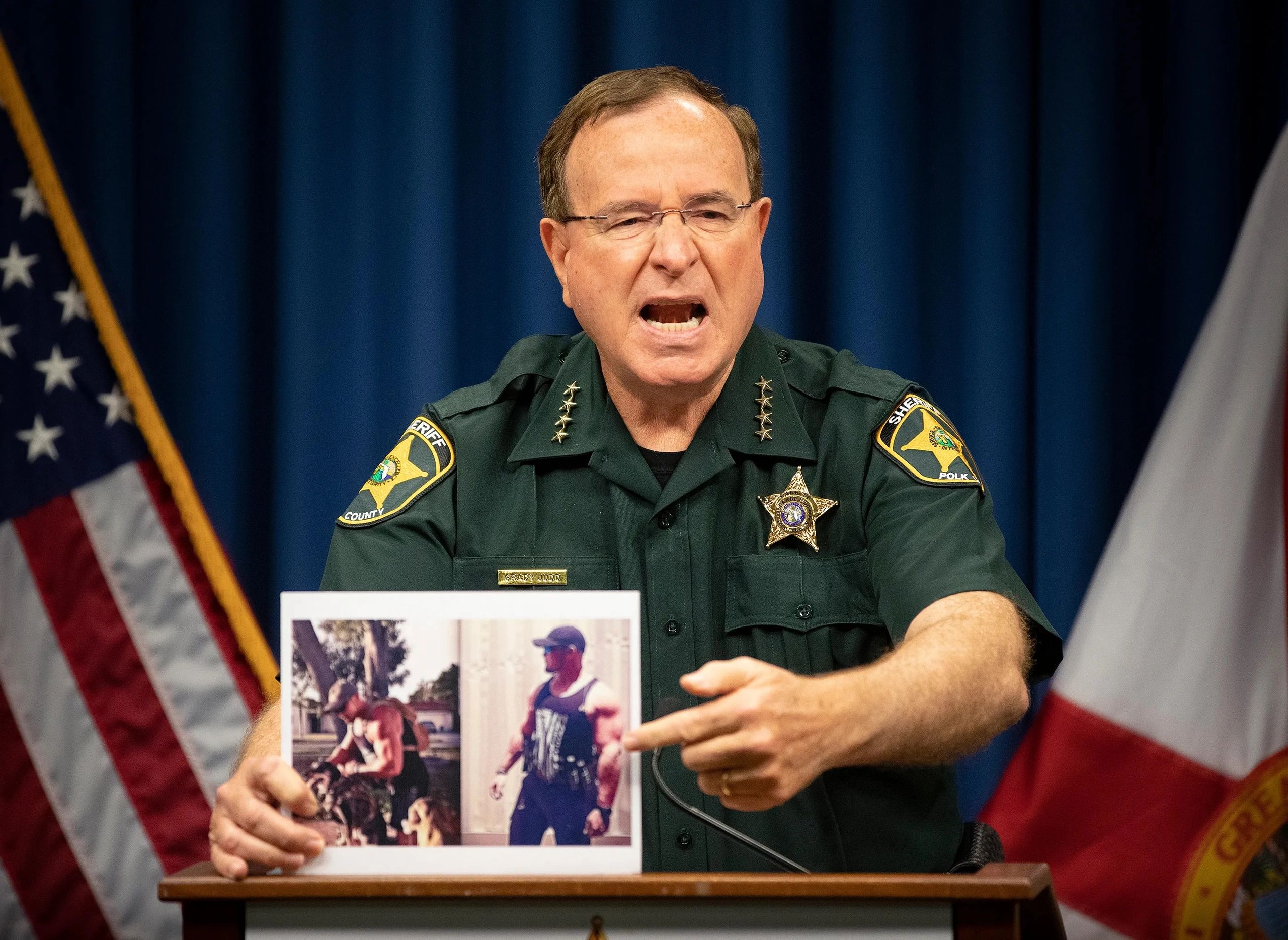
Look at Sheriff Grady Judd in Florida. Time after time, the media has tried to paint him into a corner, pushing narratives that attempt to undermine his leadership and his deputies’ actions. But instead of playing defense, he goes on the offensive—facing the media head-on, challenging their misleading questions, and standing firm on the facts. He doesn’t cater to the perception war; he dismantles it. And because of that, he wins every time. His unwavering commitment to truth and his refusal to bow to media pressure have earned him the respect of his community and the nation.
Urgent Message to Law Enforcement Professionals
Law enforcement professionals need to take a lesson from this. If law enforcement agencies stop catering to the media’s perception war and start fighting back with truth, the media loses its power. The public’s perception of law enforcement will shift not because the media allows it, but because law enforcement professionals refuse to be manipulated. The more officers and agencies expose the media’s lies and stand firm in their principles, the weaker the media’s influence becomes.
This battle isn’t just for police chiefs and sheriffs. It starts at the ground level. Officers themselves need to take responsibility for how their profession is portrayed. That means refraining from sharing and spreading negative or derogatory stories about law enforcement incidents—stories that the media weaponizes to fuel anti-police sentiment. Internal criticism and accountability are necessary, but when officers contribute to the media’s anti-law enforcement machine by sharing misleading or out-of-context incidents, they are only reinforcing the false narrative.
Every officer, every administrator, and every department has a choice: Stand up, challenge the narrative, and fight back—or remain silent and allow the media to control the perception of the profession. If law enforcement professionals do not control the message, the media will.
The truth is on the side of law enforcement. But truth means nothing if it is not defended.
Shawn Pardazi is a retired law enforcement officer with nearly three decades of experience conducting investigations on transnational smuggling and terrorist targets. He served in various capacities with the FBI, DHS, and the IRS, as well as on numerous regional and state specialized task forces investigating large-scale criminal and terrorism cases. Shawn is the author of The Patriot Jihadi, a book detailing his life experiences in the Middle East, his indoctrination into religious extremism, and how he turned that experience into helping protect the citizens of the United States as a law enforcement officer. He is also the author of Smugglers, Inc., which showcases his expertise in identifying and apprehending transnational clandestine cartel operations.