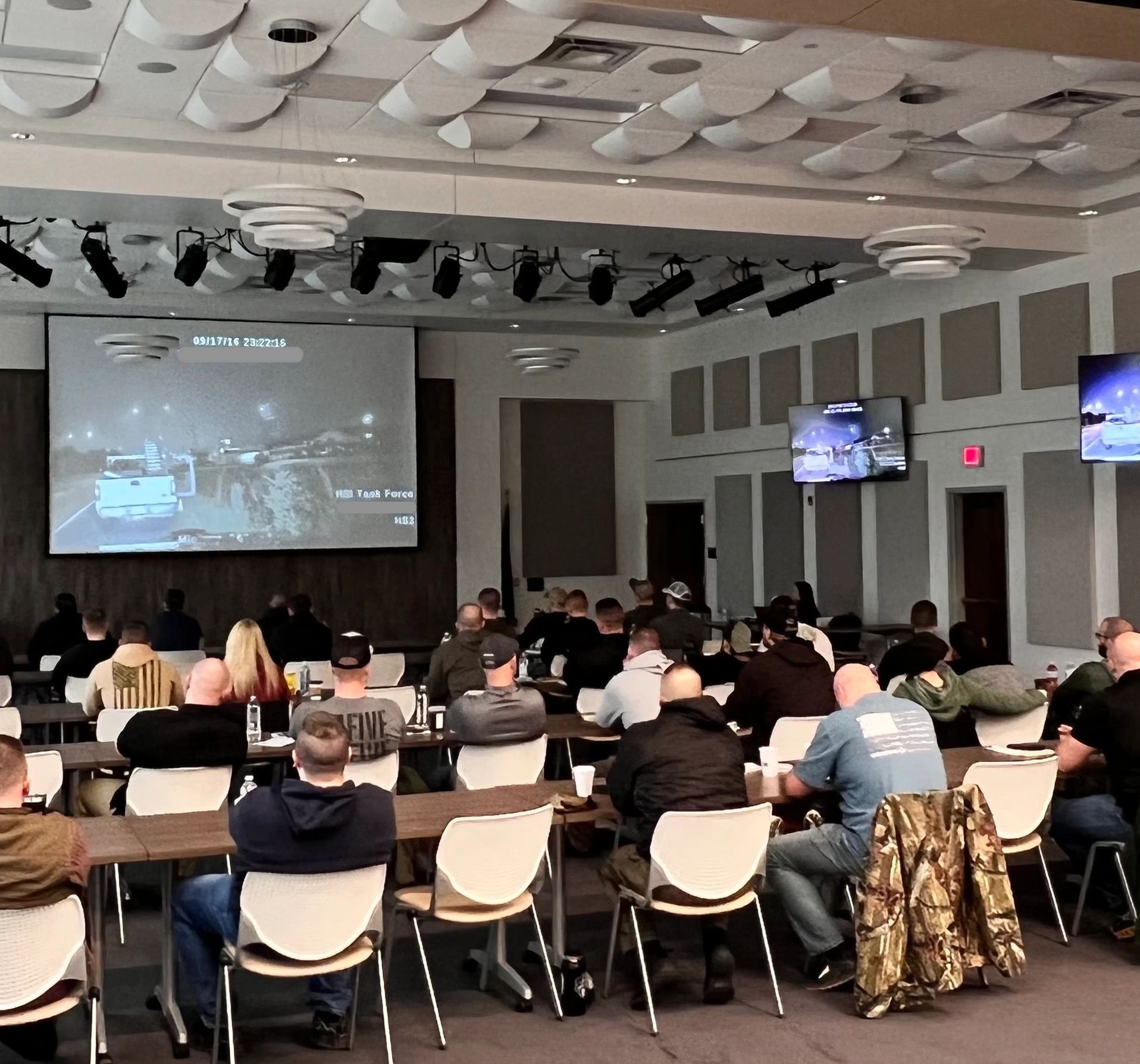
Law enforcement training is more than a slideshow-it’s a science. Shawn Pardazi explains the unseen research, planning, and delivery work behind impactful instruction that saves lives in the field.
Training law enforcement professionals is an intricate and demanding task that goes far beyond standing in front of a room and delivering a lecture. It is a process that requires meticulous research, methodical lesson planning, and a deep understanding of the subject matter—often blending operational expertise with academic research. A well-structured training session is not just about relaying information; it is about creating an engaging learning experience that resonates with officers and equips them with practical skills they can apply in the field.
The Research and Development Behind Every Hour of Training
It is often said that for every hour of a professional training session, there are at least eight hours of preparation behind the scenes. This is not an exaggeration. The foundation of a well-constructed course lies in extensive research, which includes:
• Reviewing academic literature, case studies, and industry reports to ensure the content is factually accurate, relevant, and supported by data.
• Analyzing real-world operational experience, drawing from the instructor’s fieldwork, investigative cases, or firsthand encounters to bridge theory and practice.
• Consulting with subject matter experts, including specialists in law enforcement tactics, legal professionals, and experienced officers, to refine the material and ensure its applicability.
• Incorporating evolving trends and updates, as laws, criminal methodologies, and law enforcement techniques are constantly changing.
This behind-the-scenes effort ensures that the training provided is not only informative but also practical, relevant, and up to date.
The Science of Presentation Design
Research alone is not enough—how the material is delivered determines how much of it is retained. A poorly designed presentation can lead to disengagement, making even the most critical topics seem dull or overwhelming. A well-structured course considers:
• Visual engagement – High-quality slides, videos, case studies, and interactive elements keep the audience focused and aid in knowledge retention.
• Audience interaction – Asking questions, facilitating discussions, and using scenario-based exercises help participants actively engage with the material rather than passively absorb information.
• Real-world application – Practical exercises, role-playing, and hands-on activities help translate theoretical concepts into actionable skills.
The presenter must strike a balance between structure and adaptability, ensuring that the session remains engaging while also catering to the unique learning styles of attendees.
The Importance of Versatility in Instruction
A great instructor must do more than just present information—they must connect with their audience. Law enforcement officers and government employees come from a variety of backgrounds, each with different communication styles, cultural influences, and levels of experience. The best trainers understand how to:
• Adapt their delivery to different audiences, ensuring that officers at all levels—from rookies to seasoned investigators—can grasp and apply the concepts.
• Speak the language of law enforcement, using terminology and examples that resonate with the profession.
• Recognize cultural and regional nuances, ensuring the training is both relevant and relatable.
Versatility is key. An instructor who can read the room, adjust their teaching style, and foster engagement will have a far greater impact than one who rigidly sticks to a script.
The True Cost of Training: An Investment, Not an Expense
When an agency invests in training, they are not just paying for the number of hours an instructor spends in front of a class. They are paying for the expertise, research, and years of experience that go into designing and delivering that training. The cost reflects:
• The time spent developing the course material, ensuring its accuracy and effectiveness.
• The presenter’s operational experience and ability to translate real-world challenges into actionable lessons.
• The instructor’s skill in delivering engaging, high-quality instruction tailored to law enforcement professionals.
Agencies and officers must shift their mindset when it comes to training budgets. The focus should not be on how many hours a course lasts, but on the quality of instruction and its long-term impact. A well-trained officer is a more effective, confident, and safer professional—something no agency can afford to overlook.
Final Thoughts
The next time you attend a training session, remember that you are not just paying for the hours you spend in that room. You are investing in the years of expertise, research, and preparation that went into making that class a valuable learning experience. Law enforcement agencies and officers should see training as an essential part of professional development, not as an optional expense. The best officers are those who continuously seek knowledge and refine their skills—because in this profession, knowledge is power, and training is survival.
Shawn Pardazi, the founder of Triple I Solutions, specializes in training law enforcement, intelligence personnel, and the public on behavioral understanding, communication skills, Middle Eastern culture, and terrorism and indoctrination detection. Raised in the Middle East, Shawn was indoctrinated and trained as a child soldier before escaping to the United States. He later served nearly three decades in law enforcement, working on specialized task forces with the FBI, DHS, and other agencies, investigating transnational criminal organizations, smuggling networks, and terrorism-related crimes. Now, he dedicates his expertise to educating both government officials and private citizens, with a strong emphasis on terrorism detection and counter-radicalization.
For more information on available training programs and speaking engagements, visit www.shawnpardazi.com